
Stair Railing Materials Compared: Glass vs Metal vs Wood vs Cable vs Iron
Choosing a stair railing material? Here's a side-by-side comparison of wood, metal, iron, cable and glass — look, cost per linear foot, maintenance and what each is right for.
Last updated: 2026Railing Material Comparison
The railing sets the entire personality of a staircase, and choosing between wood, metal, iron, cable and glass comes down to four things: look, cost, maintenance and what the material is genuinely right for. Here’s an honest side-by-side from a shop that fabricates and installs all five across Dallas–Fort Worth, so you can match the material to your home, your budget and your life.
| Material | Cost / lf | Maintenance | Ideal for |
|---|---|---|---|
| Wood | $40–$120 | periodic refinishing | traditional homes, budget |
| Metal | $70–$200 | low | modern, durable, high-traffic |
| Iron | $80–$250 | low (powder-coat) | classic-luxury, ornate or flat-bar |
| Cable | $120–$350 | occasional re-tension | minimal, view-preserving |
| Glass | $150–$400 | cleaning | open, light-filled, modern |
A closer look at each material
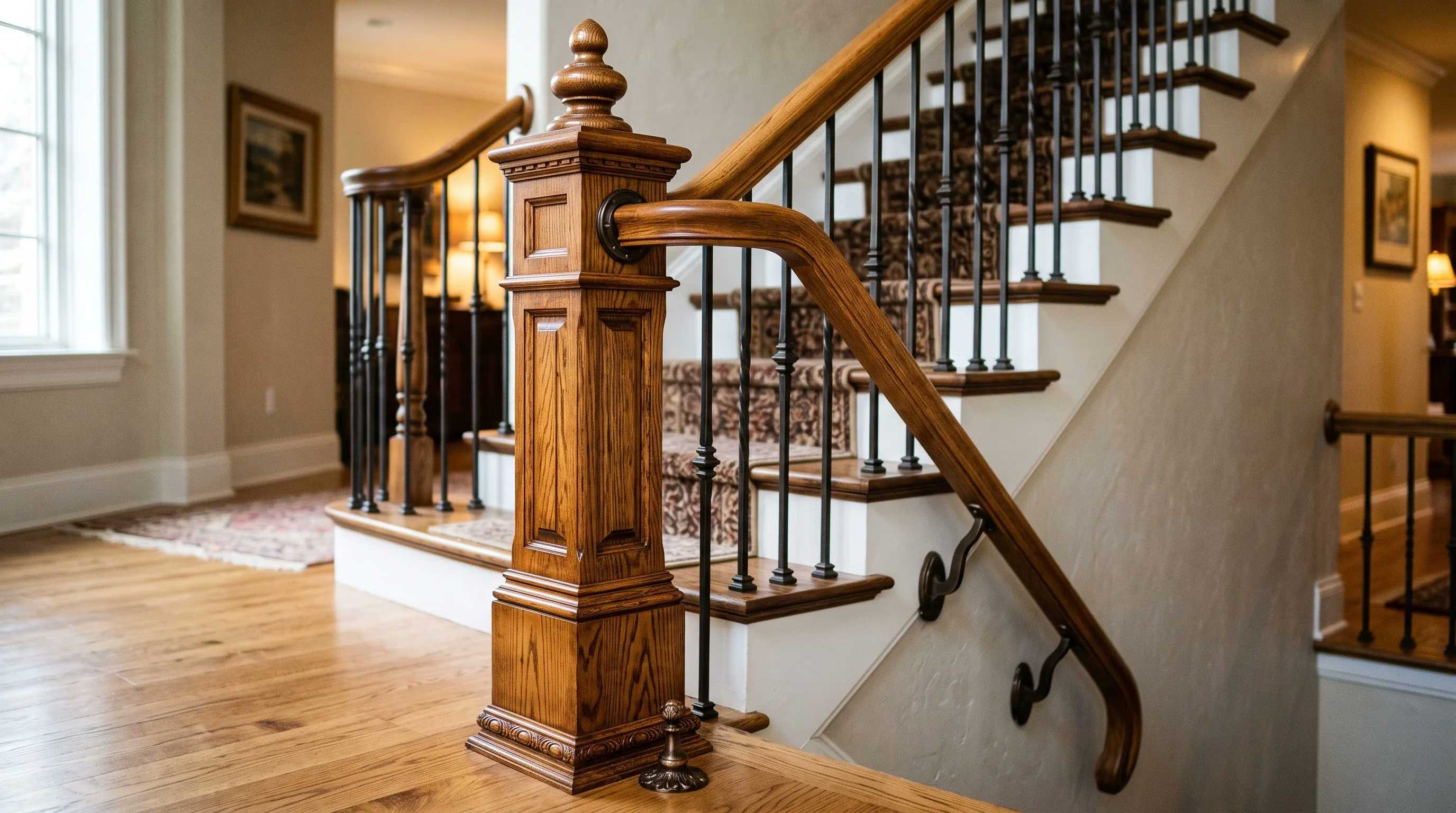
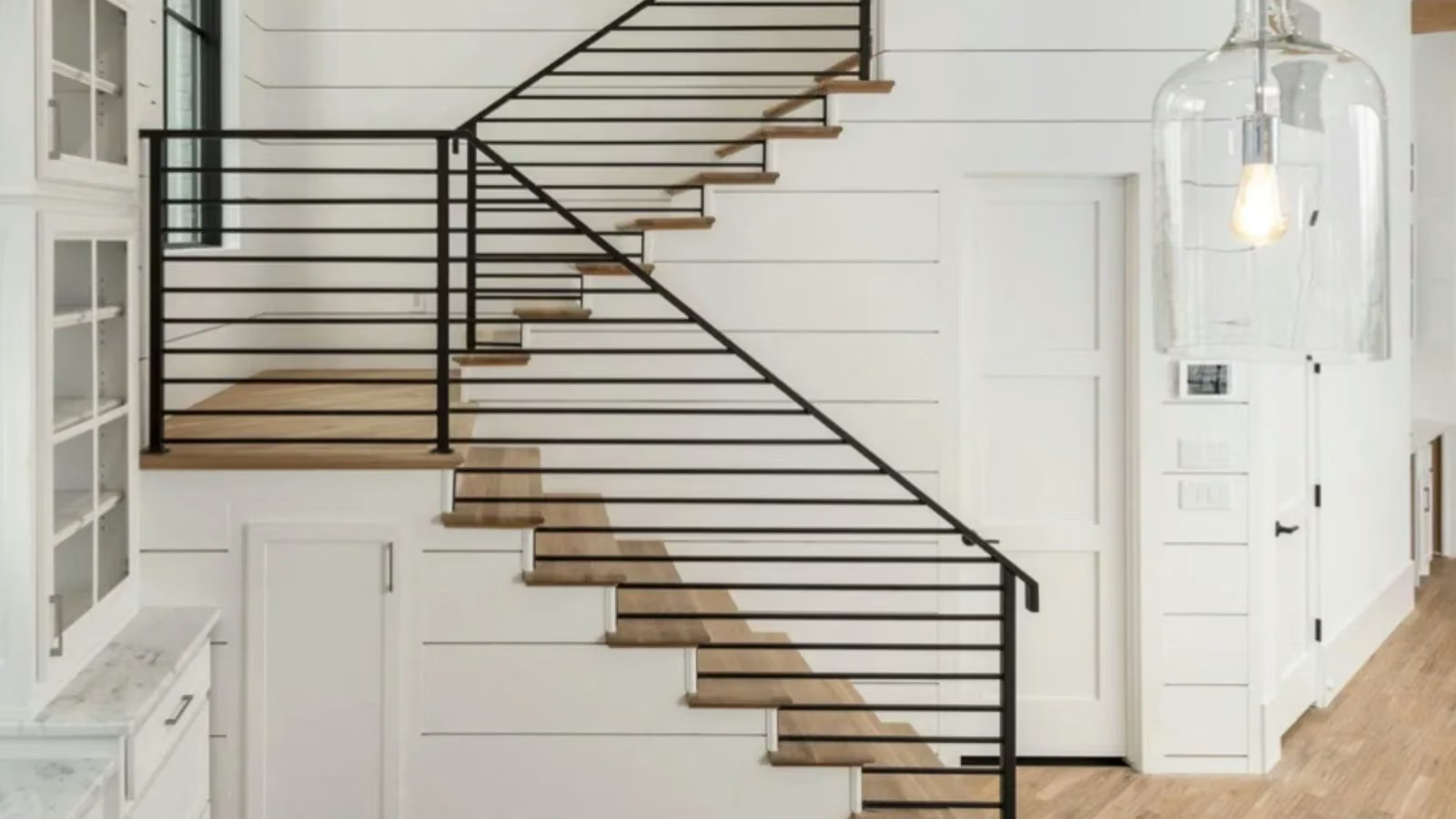
Wood is warm, classic and the most budget-friendly; the trade-off is periodic refinishing and the fact that thin builder-grade spindles look dated. Metal (flat-bar or tube) is durable, modern and nearly maintenance-free — a great all-rounder for busy homes. Iron is the North Texas favorite: it modernizes a stair instantly, comes in ornate or sleek flat-bar styles, and its powder-coat finish shrugs off daily life. Cable delivers an airy, view-preserving look for modern and view-oriented homes, with occasional re-tensioning to keep the lines taut. Glass is the premium showpiece — nearly invisible, it opens the space completely and even blocks sound and drafts, in exchange for regular cleaning.
How to choose
Start with the look you want and the budget per foot, then sanity-check it against maintenance tolerance and household needs:
- Tightest budget / traditional home: wood.
- Best all-round value and durability: iron or metal.
- Most open, modern feel with a view to preserve: cable.
- Premium, light-maximizing statement: glass.
- Young kids or pets: iron or glass close the gaps that old wide-spaced wood spindles leave; we build every option to current baluster-spacing standards.
Many homeowners land on a combination — a wood or metal cap rail with iron balusters, or glass panels with a metal cap — which balances cost, warmth and modern lines. For exact pricing, see our stair railing cost guide.
The FJR difference
We build all five in-house, so we can match your railing to a custom iron door and show you real samples against your space at the free consultation — with a 1-year workmanship warranty on the install. Explore stair railing installation, glass stair railings and cable stair railings.
Matching the railing to your home’s style
Beyond cost, the best material is the one that fits your home. Traditional and transitional homes usually look best with wood or ornate iron; modern and contemporary homes suit flat-bar metal, cable or glass; classic-luxury interiors are where wrought iron scrollwork shines. Consider the sightlines too — if the staircase frames a view or a bright window wall, cable or glass keeps that openness, while a solid wood rail can close it in. Because we fabricate in-house, you’re never limited to a catalog: we can match the railing to your flooring, your trim and even your entry door for one cohesive design.
Safety and code notes
Whatever material you choose, the railing has to meet current code for guard height and baluster spacing — the gaps must be narrow enough that a small child can’t slip through. Older wide-spaced wood spindles frequently fail this, which is one more reason a material swap is often a safety upgrade as much as a style one. We build every option to code as part of the install.
Maintenance expectations by material
Day-to-day upkeep is a real part of the decision. Wood needs periodic refinishing every several years and the occasional tightening as joints move with humidity. Metal and iron are the lowest-maintenance — a powder-coat finish means little more than an occasional wipe-down and years between any touch-up. Cable needs occasional re-tensioning to keep the lines taut and looking crisp. Glass is low-effort structurally but shows fingerprints and dust, so plan on regular cleaning to keep it looking its best. If a hands-off railing is a priority, iron or metal is usually the easiest to live with.
What Drives the Cost
 Look you want (traditional vs modern)
 Budget per linear foot
 Maintenance tolerance
 Sightlines / openness
 Kids/pets and safety
Ready for an Exact Figure?
Get an exact figure with a free in-home estimate, or explore Stair Railing Installation, stair railing cost guide.
Get Your Exact Price
Free in-home estimate. Veteran-owned. Serving all of Dallas–Fort Worth.
Frequently Asked Questions
Which stair railing material is right for you?+
It depends on look and budget: wood is most economical, iron is the DFW favorite, glass and cable give the most open feel.
What's the most affordable railing material?+
Wood handrails at $40–$120 per linear foot.
Which railing gives the most open, modern look?+
Glass or cable — both preserve sightlines; glass also blocks sound and wind.
Which railing is most durable and low-maintenance?+
Powder-coated metal and iron are very low-maintenance and durable.
Can you help me choose?+
Yes — we'll compare options for your home and budget at the free in-home consultation.
Ready for an Exact Price?
Free in-home estimate. Veteran-owned. Serving all of Dallas–Fort Worth.